

A good night’s sleep is something that we all crave. There’s nothing better than waking up naturally in the morning, feeling well rested and ready for the day. Not only does a good sleep put us in a better mood, but sleep is also crucial for bodily function. Frequent poor sleep has a negative impact on mental health, oral health and skin health, as well as making it harder for the brain to create memories and communicate.
Unfortunately, a restless night is all too common for many of us due to high-pressure work commitments and caring responsibilities. So how can we help ourselves, and create a bedroom atmosphere that increases our chances of a restful night? Let’s take a look.
Colour choice
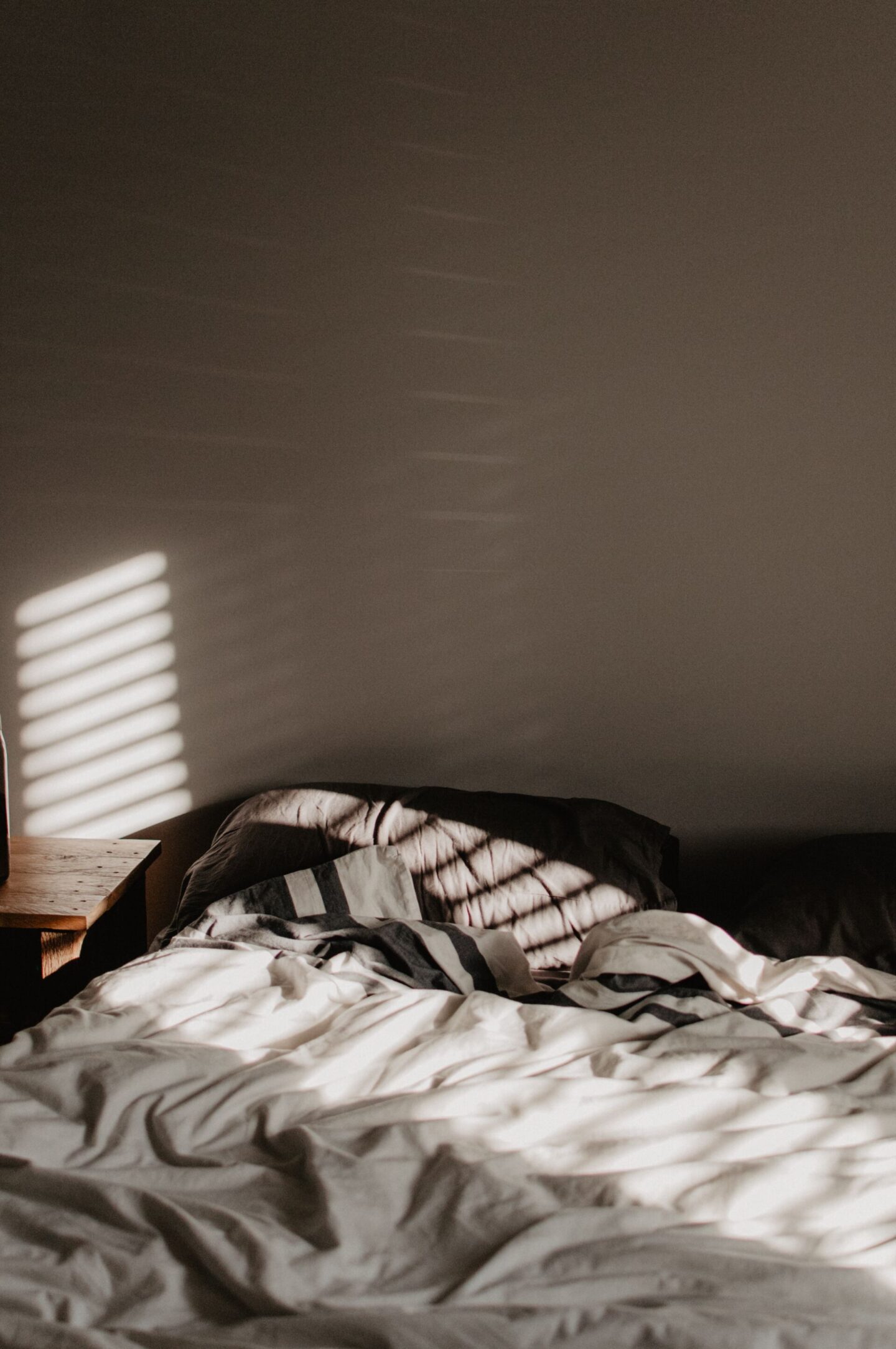
Your choice of wall and ceiling colour is more important in your bedroom than almost any other room in your house. If you’re surrounded by bright, busy prints or a vibrant red feature wall, you may find it harder to relax and drift off, no matter how pretty it looks in the daytime.
Instead, opt for relaxing colours such as neutrals and natural shades of green and blue. These colours are more likely to feel soothing and promote feelings of calm. For the ultimate relaxing effect, paint your ceiling as well, to make the visual transition around your room easier on your eyes. This works particularly well with soft colours like warm pale pinks or taupe.
Control temperature and air quality
The atmosphere of your bedroom will almost certainly impact your sleep, unless you’re someone who could happily sleep in a crowded room. Excess heat, for example, can disrupt your sleep pattern even if you don’t actually wake up, as you’re still likely to remove your duvet. Experts suggest that the best temperature for a bedroom is around 18℃.
Additionally, the quality of the air in your room can also make a difference, particularly if you have allergies. Where possible, having a stream of fresh air can be beneficial, and you should also keep an eye out for any signs of mould. Mould can cause the same symptoms as allergies, leaving you sneezing and coughing – and with a disrupted night’s rest.
Lighting to support your circadian rhythm
Our sleep patterns are regulated by our circadian rhythms. These are 24hr cycles within our body that help us recognise when we need to sleep and when to wake – a biological process that stems from a time before alarm clocks.
Unfortunately, artificial lighting is now having a huge impact on when we go to sleep. Unless you’re exhausted, you’re fairly unlikely to drift off in a brightly lit room. However, that’s what many of us expect – we turn off the lights, and then lie there tossing and turning. Then, in the morning, we’re shocked into waking by an alarm clock, rather than a gradual sunrise.
To help yourself slowly drift off naturally, make sure the lighting in your room is soft – rather than a bright white light, opt for lamps with a warm glow, ideally with a dimmer switch. You can also purchase alarm clocks that simulate sunrise and sunset, helping you ease into sleep and waking, which can be particularly beneficial for those who struggle to drift off. Finally, leave your phone out of your room – staring at a screen before you close your eyes is far too stimulating, and will leave you wide awake and watching the clock
Leave a Reply